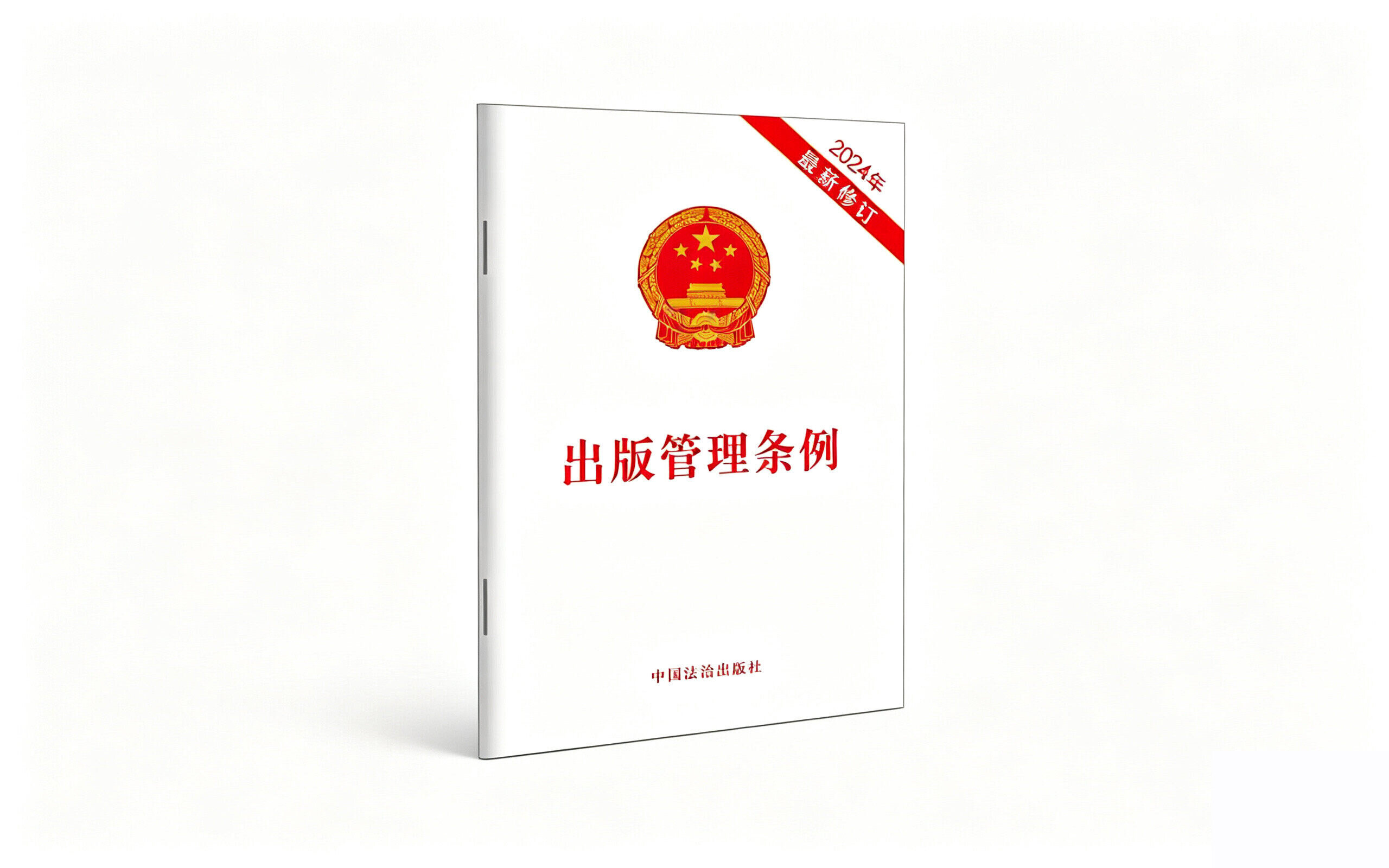
Regulations on the Administration of Publishing (Revised in 2024)
Order of the State Council of the People's Republic of China
No. 343
The "Regulations on the Administration of Publications" were adopted at the 50th executive meeting of the State Council on 2001/12/12, and are hereby promulgated, effective as of 2002/2/1.
Premier Zhu Rongji
2001 12, 25
Regulations on the Administration of Publishing
(Promulgated by Order No. 343 of the State Council of the People's Republic of China on 2001/12/25; first amended pursuant to Decision of the State Council on Amending the Regulations on Publication Administration dated 2011/3/19; second amended pursuant to Decision of the State Council on Abolishing and Amending Certain Administrative Regulations dated 2013/7/18; third amended pursuant to Decision of the State Council on Amending Certain Administrative Regulations dated 2014/7/29; fourth amended pursuant to Decision of the State Council on Amending Certain Administrative Regulations dated 2016/2/6; fifth amended pursuant to Decision of the State Council on Amending and Abolishing Certain Administrative Regulations dated 2020/11/29; sixth amended pursuant to Decision of the State Council on Amending and Abolishing Certain Administrative Regulations dated 2024/12/6)
Chapter 1: General Provisions
Article 1: To strengthen the administration of publishing activities, foster and revitalize a socialist publishing industry and sector with Chinese characteristics, safeguard citizens' right to exercise freedom of the press in accordance with the law, and promote the development of socialist spiritual and material civilization, these Regulations are enacted pursuant to the Constitution.
Article 2: These Regulations shall apply to publishing activities conducted within the People's Republic of China.
For purposes of this Regulation, publishing activities include the publication, printing or reproduction, importation, and distribution of publications.
For the purposes of this Ordinance, "publications" refer to newspapers, periodicals, books, audio-visual products, electronic publications, and other similar materials.
Article 3. Publishing activities must adhere to the direction of serving the people and socialism, uphold Marxism-Leninism, Mao Zedong Thought, Deng Xiaoping Theory, and the "Three Represents" as guiding principles, implement the Scientific Outlook on Development, disseminate and accumulate scientific, technological, and cultural knowledge that enhances national quality, promotes economic development, and advances social progress, champion outstanding national culture, foster international cultural exchange, and enrich and elevate the spiritual life of the people.
Article 4: Engaging in publishing activities shall prioritize social benefits and achieve a combination of social and economic benefits.
Article 5: Citizens shall have the right to exercise freedom of the press in accordance with the law, and all levels of people's governments shall guarantee this right.
When exercising the right to freedom of publication, citizens must abide by the Constitution and laws. They shall not oppose the basic principles established by the Constitution, nor infringe upon the interests of the state, society, or the collective, or the legitimate freedoms and rights of other citizens.
Article 6 The publishing administrative department of the State Council is responsible for the supervision and administration of all publishing activities nationwide. Other relevant departments of the State Council shall, within the scope of their respective duties as prescribed by the State Council, be responsible for the supervision and administration of related publishing activities.
The publishing administration department of the local people's governments at or above the county level (hereinafter referred to as the publishing administrative authority) is responsible for supervising and managing publishing activities within its jurisdiction. Other relevant departments of the local people's governments at or above the county level shall, within their respective responsibilities, be responsible for the supervision and management of related publishing activities.
Article 7. When the publishing administrative department investigates suspected illegal activities related to the publication, printing, copying, importation, or distribution of publications based on evidence of violations or reports, it may inspect items and premises associated with such activities. Items proven to be connected to illegal activities may be sealed or seized.
Article 8: Social organizations in the publishing sector shall implement self-regulation in accordance with their charters, under the guidance of the publishing administrative authority.
Chapter 2: Establishment and Management of Publishing Units
Article 9 Newspapers, periodicals, books, audio-visual products, and electronic publications shall be published by publishing units.
For the purposes of this Regulation, "publishing units" include newspapers, periodical publishers, book publishing houses, audio-video publishing houses, and electronic publishing houses.
If a legal entity publishes newspapers or periodicals without establishing a newspaper or periodical publishing house, the newspaper editorial office or periodical editorial office established by such entity shall be deemed a publishing unit.
Article 10: The publishing administrative department of the State Council shall formulate a plan for the total number, structure, and layout of publishing units nationwide, and guide and coordinate the development of the publishing industry and sector.
Article 11: To establish a publishing unit, the following conditions must be met:
(1) The name and articles of association of the publishing entity;
(II) Have a host unit and its competent authority recognized by the publishing administrative department of the State Council;
(3) Clear business scope;
(4) Have registered capital of more than 30 ten thousand yuan and a fixed workplace;
(5) An organizational structure suited to the scope of business and editorial and publishing professionals who meet national qualification requirements;
(6) Other conditions prescribed by laws and administrative regulations.
Establishment of a publishing unit shall comply with the national plan for the total number, structure, and layout of publishing units, in addition to meeting the conditions set forth in the preceding paragraph.
Article 12: To establish a publishing unit, its sponsoring entity shall submit an application to the publishing administrative department of the people's government of the province, autonomous region, or municipality directly under the Central Government where it is located. Upon approval by this department, the application shall be submitted to the State Council's publishing administrative department for final approval. If the established publishing unit is to be classified as a public institution, procedures for institutional establishment and staffing approval must also be completed.
Article 13: The application for establishing a publishing unit shall specify the following matters:
(I) Name and address of the publisher;
(II) Name and address of the sponsoring unit and supervising authority of the publisher;
(3) Name, address, and qualification documents of the legal representative or person in charge of the publishing unit;
(4) Funding sources and amounts for the publishing entity.
To establish a newspaper office, periodical office, or the editorial department of a newspaper or periodical, the application must also specify the title of the publication, its frequency, format (page size), and printing location.
The application must include the publishing unit's articles of association and relevant supporting documents from the sponsoring entity and its competent authority for establishing the publishing unit.
Article 14: The publishing administrative department of the State Council shall, within 60 days from the date of accepting an application for the establishment of a publishing unit, make a decision to approve or disapprove it. The relevant provincial, autonomous regional, or municipal people's government publishing administrative department shall notify the main organizing unit in writing. If the application is not approved, the reasons shall be stated.
Article 15: The organizing entity that establishes a publishing unit shall, within 60 days from the date of receiving the approval decision, register with the publishing administrative department of the people's government of the province, autonomous region, or municipality directly under the Central Government where it is located, and obtain a publishing license. The registration matters shall be prescribed by the publishing administrative department of the State Council.
After obtaining the publishing license, institutions that are public institution legal persons must register with the public institution registration authority and obtain a certificate of public institution legal person status in accordance with the law. Enterprises that are corporate legal persons must register with the industry and commerce administration and obtain a business license in accordance with the law.
Article 16: Newspaper offices, periodical publishing houses, book publishing houses, audio-video publishing houses, and electronic publishing houses shall meet the requirements for legal person status. Upon approval and registration, they shall obtain legal person status and independently bear civil liability with all their legal person assets.
In accordance with the third paragraph of Article 9 of these Regulations, newspaper editorial offices and journal editorial offices deemed to be publishing units shall not have legal person status; their civil liabilities shall be borne by their sponsoring organizations.
Article 17 If a publishing unit changes its name, sponsor, competent authority, scope of business, or capital structure; undergoes merger or division; establishes a branch office; publishes new newspapers or periodicals; or changes the names of existing newspapers or periodicals, it shall follow the approval procedures set forth in Articles 12 and 13 of these Regulations. Publishing units that are public institution legal persons must also submit the approval documents to the public institution registration authority for corresponding registration. Those that are enterprise legal persons must submit the approval documents to the administration for industry and commerce for corresponding registration.
For changes to matters other than those listed in the preceding paragraph, a publishing unit must obtain approval from its sponsoring entity and competent authority, apply for registration change with the publishing administrative department of the local provincial, autonomous regional, or municipal government, and file a record with the State Council's publishing administrative department. If the publishing unit is a public institution legal person, it shall also submit the approval document to the public institution registration management authority to process the registration change; if it is an enterprise legal person, it shall also submit the approval document to the market regulation administration to process the registration change.
Article 18: If a publishing unit suspends its publishing activities, it shall file a record with the publishing administrative department of the people's government of the province, autonomous region, or municipality where it is located and provide reasons and the duration. The suspension period shall not exceed 180 days.
If a publishing unit ceases its publishing activities, the sponsoring unit shall submit an application and obtain approval from the competent authority. The sponsoring unit must then register for cancellation with the provincial, autonomous regional, or municipal publishing administrative department where the unit is located and file a record with the State Council's publishing administrative department. If the publishing unit is a public institution legal person, it must also present the approval document to the public institution registration authority for cancellation registration; if it is an enterprise legal person, it must present the approval document to the administration for industry and commerce for cancellation registration.
Article 19: If a book publisher, audio-video publisher, or electronic publication publisher has not engaged in publishing activities for 180 days since registration, or if a newspaper house or periodical house has not published newspapers or periodicals for 90 days since registration, the original publishing administrative department shall cancel the registration and report it to the State Council's publishing administrative department for record.
If any of the circumstances listed in the preceding paragraph occurs due to force majeure or other legitimate reasons, the publisher may apply to the original registration authority for an extension.
Article 20 Annual publication plans of book publishers, audio-visual publishers, and electronic publication publishers, as well as major topics involving national security and social stability, shall be reviewed by the publishing administrative department of the people's government of the province, autonomous region, or municipality directly under the Central Government where they are located and filed with the publishing administrative department of the State Council. Publications involving major topics that have not been filed prior to publication shall not be published. Specific measures shall be formulated by the publishing administrative department of the State Council.
Major editorial topics of the journal shall go through the filing procedures as prescribed in the preceding paragraph.
Article 21 Publishing units shall not sell or otherwise transfer their name, ISBN, ISSN, copyright registration number, or page allocation to any unit or individual, nor rent out their name or ISSN.
Publishers and their staff must not seek illegitimate benefits through publishing activities.
Article 22: Publishing units shall, in accordance with relevant national regulations, provide free copies to the National Library of China, the Chinese Version Library, and the publishing administrative department under the State Council.
Chapter 3: Publication of Publications
Article 23: Citizens may, in accordance with the provisions of this Ordinance, freely express their views and opinions on state affairs, economic and cultural endeavors, and social matters, and freely publish the results of their scientific research, literary and artistic creations, and other cultural activities.
Legally published works are protected by law. No organization or individual may illegally interfere with, obstruct, or disrupt their publication.
Article 24: Publishing units shall implement an editor responsibility system to ensure that the content of publications complies with the provisions of these Regulations.
Article 25: No publication shall contain any of the following content:
(1) Opposing the basic principles established by the Constitution;
(2) Endangering national unity, sovereignty, or territorial integrity;
(3) Leaking state secrets, endangering national security, or damaging the nation's honor and interests.
(4) Inciting ethnic hatred or discrimination, undermining national unity, or infringing upon the customs and habits of ethnic groups.
(5) Promoting cults or superstitions;
(6) Disrupting social order or undermining social stability;
(7) Promoting obscenity, gambling, violence, or inciting criminal acts;
(8) Insulting or defaming others, infringing upon their legitimate rights and interests.
(9) Endangering public morality or the excellent cultural traditions of the nation;
(10) Any other content prohibited by laws, administrative regulations, or national provisions.
Article 26: Publications intended for minors shall not contain content that encourages imitation of acts violating social morality or committing illegal and criminal offenses, nor shall they include content involving horror, cruelty, or other elements detrimental to the physical and mental health of minors.
Article 27. If the content of a publication is untrue or unfair, thereby infringing upon the lawful rights and interests of citizens, legal persons, or other organizations, the publishing unit shall issue a public correction, eliminate the adverse effects, and bear other civil liabilities in accordance with the law.
If content published in newspapers or periodicals is untrue or unfair, thereby infringing upon the lawful rights and interests of citizens, legal persons, or other organizations, the affected party may request the relevant publisher to issue a correction or a rebuttal. The publisher shall publish such correction or rebuttal in its recently issued newspaper or periodical. If the publisher refuses, the affected party may file a lawsuit with the People's Court.
Article 28 Publications must, in accordance with relevant state regulations, include the names and addresses of the author, publisher, printer or reproducer, and distributor; the ISBN, ISSN, or edition number; cataloging-in-publication data; publication date; issue date; and other required information.
Specifications, formats, layouts, bindings, and proofreading of publications must comply with national standards and regulations to ensure quality.
Publications must use language and writing systems that comply with national laws, regulations, and applicable standards.
Article 29: No unit or individual shall forge or counterfeit the name of a publishing house or the title of a newspaper or periodical to publish publications.
Article 30: Middle and primary school textbooks shall be approved by the education administrative department of the State Council. Publishing and distribution entities must possess the necessary capital, organizational structure, personnel, and other conditions required for textbook publishing and distribution, and obtain approval from the publishing administrative department of the State Council for their qualification to publish and distribute textbooks. For middle and primary school textbooks included in government procurement, distributors shall be selected in accordance with relevant provisions of the Government Procurement Law of the People's Republic of China. No other entity or individual may engage in the publishing or distribution of middle and primary school textbooks.
Chapter 4: Printing, Reproduction, and Distribution of Publications
Article 31: Units engaged in publishing printing or reproduction shall submit an application to the publishing administrative department of the people's government of the province, autonomous region, or municipality directly under the Central Government where they are located. Upon approval and after completing relevant procedures with the industrial and commercial administration department in accordance with national regulations, they may engage in publishing printing or reproduction.
Newspapers, periodicals, books, audio-visual products, and electronic publications shall not be printed or reproduced without permission and the required procedures.
Article 32: Publishing units shall not entrust the printing or reproduction of publications to any unit that has not obtained a license for publishing printing or reproduction.
Publishers must provide proof of compliance with national regulations for printing or reproducing publications and enter into a contract with the printing or reproduction unit in accordance with the law.
Printing or copying units shall not accept commissions from non-publishing units or individuals to print newspapers, periodicals, books, or reproduce audio-video products and electronic publications. They shall not print, distribute newspapers, periodicals, or books, or reproduce and distribute audio-video products and electronic publications without authorization.
Article 33. A printing or reproduction unit may undertake the printing or reproduction of overseas publications upon approval by the publishing administrative department of the people's government of the province, autonomous region, or municipality directly under the Central Government where it is located. However, all printed or reproduced overseas publications must be transported out of China and shall not be distributed within the country.
Publications printed or reproduced abroad must be reviewed by the publishing administrative department of the people's government of the province, autonomous region, or municipality directly under the Central Government. The client shall hold an authorization letter from the copyright owner and register with the copyright administrative department.
Article 34: Printing or reproduction units shall retain one copy of each printed or reproduced publication for inspection within 2 years from the date of completion.
Article 35: Units engaging in wholesale distribution of publications shall obtain approval from the publishing administrative department of the people's government of the province, autonomous region, or municipality directly under the Central Government and acquire a "Publications Business License."
Units and individual businesses engaging in retail sales of publications must obtain approval from the publishing administrative department of the county-level people's government and acquire a "Publications Business License."
Article 36: Units or individual industrial and commercial households engaged in the distribution of publications via the Internet or other information networks shall obtain a "Publications Business License" in accordance with the provisions of these Regulations.
Operators providing online trading platforms must verify the business identity of units or individual businesses applying to engage in publication distribution through their platform and validate their Publication Operation License.
Article 37: Units and individual businesses engaged in the distribution of publications that change their registered items on the "Publication Operation License," or undergo mergers, consolidations, or divisions, shall handle approval procedures in accordance with Article 35 of these Regulations.
Units and individual businesses engaged in the distribution of publications must file a record with the original approving publishing administration authority when terminating their business operations.
Article 38: Publishing units may distribute publications they have produced but shall not distribute publications produced by other publishing units.
Article 39: The State permits the establishment of foreign-invested enterprises engaged in the distribution of books, newspapers, periodicals, and electronic publications.
Article 40 Printing or reproduction units, distribution units, or individual businesses shall not print, reproduce, or distribute publications that fall under any of the following circumstances:
(1) Contains content prohibited under Articles 25 and 26 of these Regulations;
(2) Illegally imported;
(3) Forging or counterfeiting the name of a publishing unit or the title of a newspaper or periodical.
(4) Where the publisher's name is not indicated;
(5) Textbooks for middle and primary schools that have not been legally reviewed;
(6) Infringement of others' copyrights.
Chapter 5: Import of Publications
Article 41 Import operations for publications shall be conducted solely by publication import operators established under this Regulation. No other entities or individuals may engage in publication import activities.
Article 42: To establish a publication import business unit, the following conditions shall be met:
(1) Name and bylaws of the publication import business entity;
(II) Have a host unit and its competent authority recognized by the publishing administrative department of the State Council;
(3) Clear business scope;
(4) Possesses the capability to review content of imported publications;
(5) Sufficient capital commensurate with publication import operations;
(6) Have a fixed place of business;
(vii) Other conditions prescribed by laws, administrative regulations, and the state.
Article 43: To establish a publication import business, an application shall be submitted to the publishing administrative department under the State Council. Upon review and approval, the entity shall obtain a Publication Import Operation License issued by the department and then apply for a business license from the administration for industry and commerce in accordance with the law.
Establishing a publication import business shall also comply with the relevant procedures prescribed by foreign trade laws and administrative regulations.
Article 44: Importers of publications that change their name, business scope, capital structure, sponsoring entity or competent authority; merge or split; or establish branches shall handle approval procedures in accordance with Articles 42 and 43 of this Regulation, and submit the approval documents to the industrial and commercial administration department for corresponding registration.
Article 45: Imported publications by publication import operators shall not contain any content prohibited under Articles 25 and 26 of this Regulation.
Publishing import operators are responsible for reviewing the content of imported publications. Provincial-level or higher publishing administrative departments under the people's governments may directly review the content of imported publications. If a publishing import operator cannot determine whether an imported publication contains content prohibited by Articles 25 and 26 of these Regulations, it may request a provincial-level or higher publishing administrative department to conduct a content review. When a provincial-level or higher publishing administrative department reviews the content of an imported publication upon such a request, it may charge fees in accordance with standards approved by the pricing authority under the State Council.
The State Council's publishing administrative department may prohibit the import of specific publications.
Article 46: Importers of publications shall submit a catalog of the publications they intend to import to the publishing administration department of the provincial-level or higher people's government for record-keeping prior to importation. If that department identifies any publications prohibited from import or subject to import suspension, it shall promptly notify the importer and inform Customs. For any publications flagged as prohibited or suspended for import, importers shall not bring them into the country, and Customs shall not release them.
Specific measures for the filing of imported publications shall be formulated by the publishing administrative department under the State Council.
Article 47: Importers of publications must procure them from legally established publication import and distribution entities.
Article 48: Importers of publications must obtain approval from the competent publishing authority under the State Council before organizing exhibitions of foreign publications within China. No individual or entity may hold such exhibitions without prior approval.
If overseas publications exhibited under the preceding paragraph are to be sold, relevant procedures must be completed in accordance with national regulations.
Chapter 6: Supervision and Management
Article 49 The publishing administrative department shall strengthen daily supervision and management of the publishing activities of publishing units within its jurisdiction. The sponsoring unit and its competent authority of a publishing unit shall bear direct management responsibility for that unit's publishing activities and shall cooperate with the publishing administrative department to ensure compliance with all relevant regulations.
Publishing units and entities engaged in the import of publications shall submit written reports to the publishing administrative department on their publishing activities and publication import activities, in accordance with regulations issued by the State Council's publishing administrative department.
Article 50 The publishing administration department shall perform the following duties:
(1) Regulate the publication, printing, reproduction, distribution, and import of publications; manage market access and exit.
(2) Supervise publishing activities and investigate violations of these Regulations.
(3) Regulate the content and quality of publications;
(4) Manage publishing personnel in accordance with national regulations.
Article 51: The publishing administrative department shall conduct supervision and inspection on the quality of published works, including their content, editing and proofreading, printing or reproduction, and bookbinding design, in accordance with relevant regulations and standards.
Article 52 The competent publishing administrative department of the State Council shall formulate comprehensive assessment measures for publishing units and implement such assessments in a classified manner.
If a publisher, printer, reproducer, distributor, or importer no longer meets the statutory conditions for administrative licensing, the publishing administration shall order it to correct the issue within a specified time limit. If the entity fails to comply by the deadline, the original licensing authority shall revoke the administrative license.
Article 53: The State implements a professional qualification system for personnel engaged in publishing-related technical work at publishing units. Publishing professionals obtain their technical qualifications by passing the national examination for professional technical personnel. Specific measures shall be jointly formulated by the human resources and social security department and the publishing administrative department of the State Council.
Chapter 7: Safeguards and Incentives
Article 54 The State formulates relevant policies to guarantee and promote the development and prosperity of the publishing industry.
Article 55 The State supports and encourages the publication of the following outstanding and key publications:
(1) Those that play a significant role in expounding and disseminating the basic principles established by the Constitution;
(II) Significant for promoting the core socialist values, conducting education in patriotism, collectivism, socialism, and national unity among the people, and upholding social ethics, professional ethics, and family virtues.
(3) Plays a significant role in promoting excellent national culture and fostering international cultural exchange.
(4) Made significant contributions to advancing cultural innovation and timely reflecting new scientific and cultural achievements domestically and internationally;
(5) Projects that significantly serve agriculture, rural areas, and farmers, and promote public cultural services.
(6) Others of significant intellectual, scientific, cultural, or artistic value.
Article 56: The State shall guarantee the publication and distribution of textbooks.
The state supports the publication and distribution of minority language publications and Braille materials.
The state implements preferential policies for the distribution of publications in ethnic minority regions, border areas, economically underdeveloped regions, and rural areas.
Article 57 Where newspapers and periodicals are distributed by a postal enterprise, the enterprise shall ensure timely and accurate distribution in accordance with the contract.
Transportation companies carrying publications shall provide convenience for the transportation of publications.
Article 58: Units and individuals that have made significant contributions to the development and prosperity of the publishing industry shall be rewarded in accordance with relevant national regulations.
Article 59: For acts of illegal interference with, obstruction of, or sabotage to the publication, printing, reproduction, import, or distribution of publications, the publishing administrative departments and other relevant departments of people's governments at or above the county level shall take timely measures to stop such acts.
Chapter 8: Legal Liability
Article 60: Staff members of the publishing administrative department or other relevant departments who, by taking advantage of their positions, accept bribes or other benefits from others to approve licenses or approval documents for applicants that do not meet statutory requirements; fail to perform their supervisory duties; or fail to investigate and punish illegal activities upon discovery, resulting in serious consequences, shall be subject to disciplinary action ranging from demotion to dismissal in accordance with the law. If such acts constitute a crime, criminal responsibility shall be pursued in accordance with the provisions on bribery, abuse of power, dereliction of duty, or other crimes under the Criminal Law.
Article 61: Where an entity engages in the publication, printing, reproduction, or import of publications without approval; operates such activities without authorization; falsely uses a publishing house's name; or forges or misrepresents newspaper or journal titles to publish materials, the publishing administrative department and the market regulation authority shall, within their statutory powers, shut down such operations. Criminal liability shall be pursued in accordance with the provisions on the crime of illegal business operations under the Criminal Law. If criminal penalties are not applicable, all publications, illegal income, and dedicated tools and equipment used for the unlawful activities shall be confiscated. If the illegal income exceeds 5 million yuan, a fine of not less than 5 times but not more than 10 times the illegal income shall be imposed. If there is no illegal income or it is less than 5 million yuan, a fine of up to 25 million yuan shall be imposed. Any infringement of others' legitimate rights and interests shall result in civil liability in accordance with the law.
Article 62: Whoever commits any of the following acts in violation of criminal law shall be held criminally liable in accordance with relevant provisions of the Criminal Law. Where the act does not constitute a crime punishable under criminal law, the publishing administrative department shall order suspension of business within a time limit for rectification, confiscate the publications and illegal income, and impose a fine of not less than 5 times but not more than 10 times the amount of illegal business operations if such amount exceeds 1 million yuan; where the amount of illegal business operations is less than 1 million yuan, a fine of up to 5 million yuan may be imposed. In serious cases, the original licensing authority shall revoke the license.
(1) Publishing or importing publications that contain content prohibited under Articles 25 and 26 of these Regulations;
(2) Printing, reproducing, or distributing publications while knowing or having reason to know that they contain content prohibited under Articles 25 and 26 of these Regulations;
(3) Knowingly or should have known that another person is publishing materials containing content prohibited under Articles 25 and 26 of this Regulation, yet selling or otherwise transferring the name, ISBN/ISSN, or page space of the publication unit to them, or renting out the name or ISSN of the unit.
Article 63: Any of the following acts shall be subject to orders by the publishing administration authority to cease illegal activities, confiscation of publications and illegal income. If the illegal business volume exceeds 1 million yuan, a fine of not less than 5 times but not more than 10 times the illegal business volume shall be imposed; if the illegal business volume is less than 1 million yuan, a fine of up to 5 million yuan shall be imposed. For serious circumstances, depending on the situation, relevant production and business activities may be restricted, an order for suspension of operations within a specified time limit may be issued, or the original licensing authority may downgrade the relevant qualification level or revoke the license.
(1) Importing, printing, reproducing, or distributing publications banned by the competent department of the State Council for publication.
(2) Printing or reproducing smuggled overseas publications.
If an importer of imported publications fails to procure them from a qualified import operator as stipulated in these Regulations, the publishing administrative authority shall order cessation of the illegal act, confiscate the publications and any illegal income. Where the illegal income exceeds 5 million yuan, a fine of not less than 5 times but not more than 10 times the illegal income shall also be imposed. Where there is no illegal income or the illegal income is less than 5 million yuan, a fine of up to 25 million yuan shall be imposed. In serious cases, depending on the circumstances, the relevant production and business activities may be restricted, an order for suspension of operations within a specified period may be issued, or the original licensing authority may downgrade the relevant qualification level or revoke the license.
Article 64: Persons who smuggle publications shall be held criminally liable in accordance with the provisions on smuggling crimes in the Criminal Law. If criminal punishment is not warranted, they shall be subject to administrative penalties by customs authorities in accordance with the Customs Law.
Article 65: Any of the following acts shall result in confiscation of publications and illegal income by the publishing administrative department. If the illegal income exceeds 5 million yuan, a fine of not less than 5 times but not more than 10 times the illegal income shall be imposed; if there is no illegal income or the illegal income is less than 5 million yuan, a fine of up to 25 million yuan shall be imposed. In serious cases, depending on the circumstances, relevant production and business activities may be restricted, orders for suspension of operations within a specified period may be issued, or the original licensing authority may downgrade the qualification level or revoke the license.
(1) A publisher commissions a unit that does not hold a license for printing or reproducing publications to print or reproduce its publications.
(II) Printing or reproducing publications without obtaining the required printing or reproduction license.
(3) Printing or reproducing publications for non-publishing units or individuals upon their commission.
(4) Printing or reproducing units that fail to fulfill legal procedures for printing or reproducing overseas publications, or where not all printed or reproduced overseas publications have been transported out of the country.
(5) Printing, reproducing, or distributing publications that do not bear the name of a publishing unit by printing/reproducing units, distribution units, or individual industrial and commercial households.
Any of the following acts shall result in confiscation of publications and illegal income by the publishing administrative department. If the illegal business volume exceeds 1 yuan, a fine of not less than 5 times but not more than 10 times the illegal business volume shall be imposed; if the illegal business volume is less than 1 yuan, a fine of up to 5 yuan shall be imposed. In serious cases, depending on the circumstances, relevant production and business activities may be restricted, an order to suspend operations within a specified period for rectification may be issued, or the original licensing authority may downgrade the relevant qualification level or revoke the license:
(1) A printing or reproduction unit, a distribution unit, or an individual business operator prints, reproduces, or distributes publications bearing forged or counterfeit names of publishing houses, newspapers, or periodicals.
(2) Publishing, printing, or distributing middle school or primary school textbooks without proper legal approval, or having units other than those designated in accordance with these Regulations engage in the publishing or distribution of such textbooks.
Article 66: If a publishing unit commits any of the following acts, the publishing administrative authority shall order it to cease the illegal activities, issue a warning, and confiscate the illegally operated publications and illegal income. If the illegal income exceeds 5 million yuan, a fine of not less than 5 times but not more than 10 times the illegal income shall be imposed; if there is no illegal income or the illegal income is less than 5 million yuan, a fine of up to 25 million yuan shall be imposed. In serious cases, depending on the circumstances, the entity may be restricted from engaging in relevant production and business activities, ordered to suspend operations for rectification within a specified time limit, or have its qualification level downgraded by the original licensing authority up to revocation of the license.
(1) Selling or otherwise transferring the name, ISBN/ISSN, registration number, or layout of this publishing unit, or renting out its name or periodical title.
(2) Seeking other illegitimate benefits through publishing activities.
Article 67: Whoever engages in any of the following acts shall be ordered by the publishing administrative department to make corrections and receive a warning; if the circumstances are serious, they shall be ordered to suspend business for rectification within a specified time limit or have their license revoked by the original licensing authority:
(1) Publishing units that change their names, sponsors, or supervisory authorities; business scope; undergo merger or division; publish new newspapers or periodicals; change the names of newspapers or periodicals; or alter other matters without obtaining approval from or registering with the publishing administration authority in accordance with these Regulations.
(2) The publishing unit fails to file its annual publication plan and major topics involving national security, social stability, etc.
(3) The publisher fails to submit copies of the published material as required by these Regulations.
(4) Failure of a printing or reproduction unit to retain materials for inspection in accordance with the provisions of this Regulation.
(5) Failure of publishing import operators to submit their imported publication catalogs for filing.
(6) The publisher suspends publication activities without authorization for more than 180 days.
(7) Failure by publication distributors or import operators to complete the required change approval procedures in accordance with these Regulations.
(8) The publication does not meet relevant regulations and standards.
Article 68: Hosting exhibitions of foreign publications without approval shall be ordered by the publishing administrative department to cease the illegal act, with confiscation of the publications and any illegal income. If the circumstances are serious, the department may order suspension of business within a specified period or revoke the license issued by the original licensing authority.
Article 69: Any person who prints, reproduces, wholesales, retails, rents out, or distributes publications containing the content prohibited under Articles 25 and 26 of these Regulations, or other illegal publications, shall have such publications and illegal income confiscated. If the person provides a clear explanation and identification of the source of the illegal publications, and this is verified to be true, other administrative penalties may be mitigated or waived.
Article 70 If a unit is administratively penalized with revocation of its license for violating these Regulations, its legal representative or main person in charge shall not serve as the legal representative or main person in charge of any publishing, printing, copying, importing, or distribution unit for 10 years from the date the license is revoked.
Publishing practitioners who violate these regulations and have serious circumstances shall have their qualification certificates revoked by the original licensing authority.
Article 71: Fines imposed under these Regulations shall be decided and collected separately in accordance with relevant laws and administrative regulations. All fines collected must be turned over to the state treasury.
For purposes of this regulation, illegal gains refer to the profit remaining after deducting costs incurred from committing a violation. Where no costs were incurred or where costs cannot be reasonably calculated, the total amount obtained through the violation shall be deemed as illegal gains.
Chapter 9: Supplementary Provisions
Article 72: Where administrative regulations provide otherwise regarding the publication, reproduction, import, or distribution of audio-visual products and electronic publications, such provisions shall apply.
The State Council's publishing administrative department shall separately formulate the Measures for Accepting Publications Gifted by Overseas Institutions or Individuals, the Measures for Subscribers Ordering Overseas Publications, and the Measures for Approval and Administration of Online Publishing, in accordance with the principles of these Regulations.
Article 73 This Regulation shall come into force on 2002/2/1. The "Regulations on the Administration of Publishing" promulgated by the State Council on 1997/1/2 shall be abolished at the same time.
Need to publish a book? Consult a professional publishing consultant now.
Free Manuscript EvaluationRelated News
Prohibited Content in Formal Book Publishing and Regulations on Forbidden Material
2026/09/11
Why self-publish when you've already written a manuscript?
2026/08/17
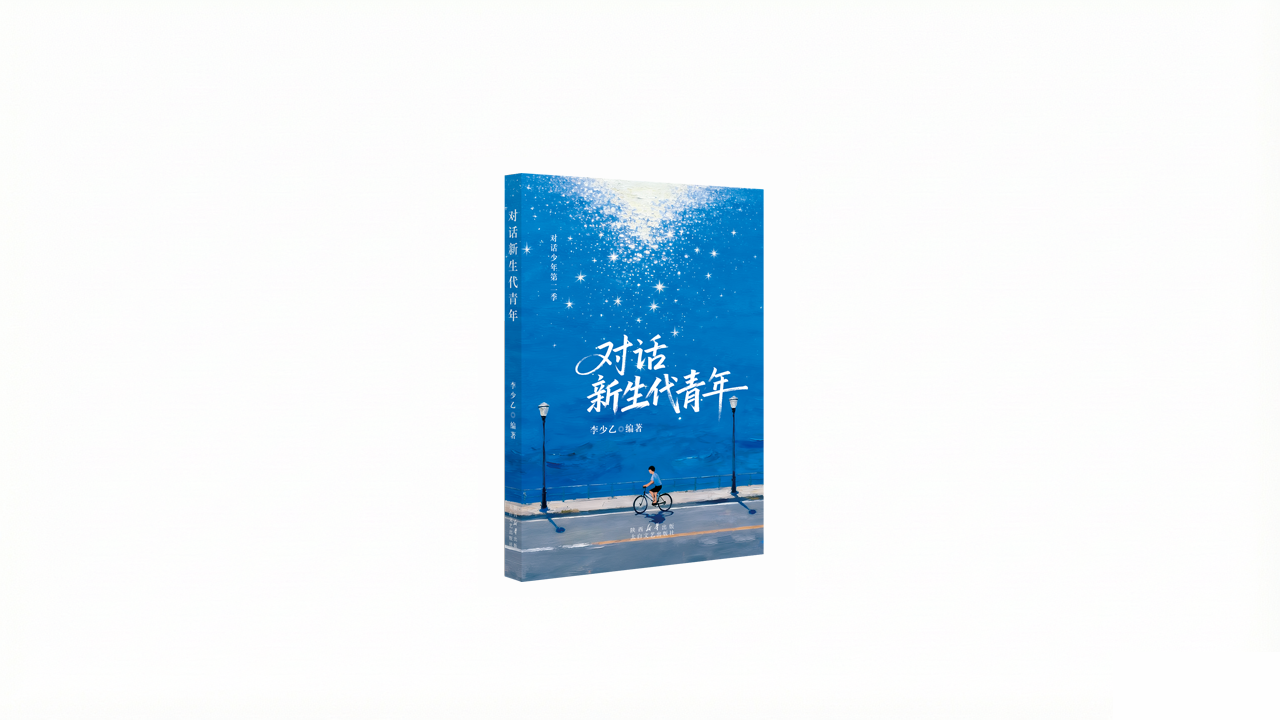
Listen to the Voices of the New Generation: "Dialogue with Young People" Now Available – Bridging Generational Gaps
2026/07/23
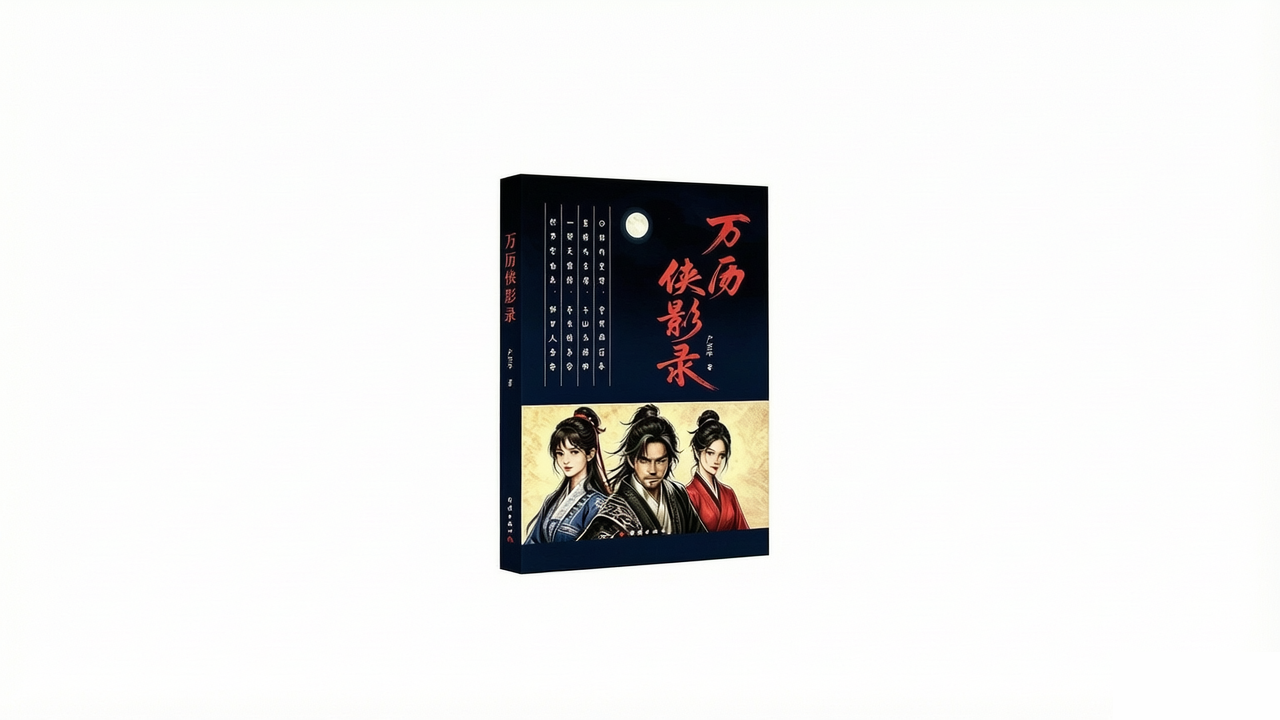
New Epic of the Wanli Era: "The Legend of the Righteous" Published, Chronicling Late Ming Turmoil with Patriotism and Chivalry
2026/07/23