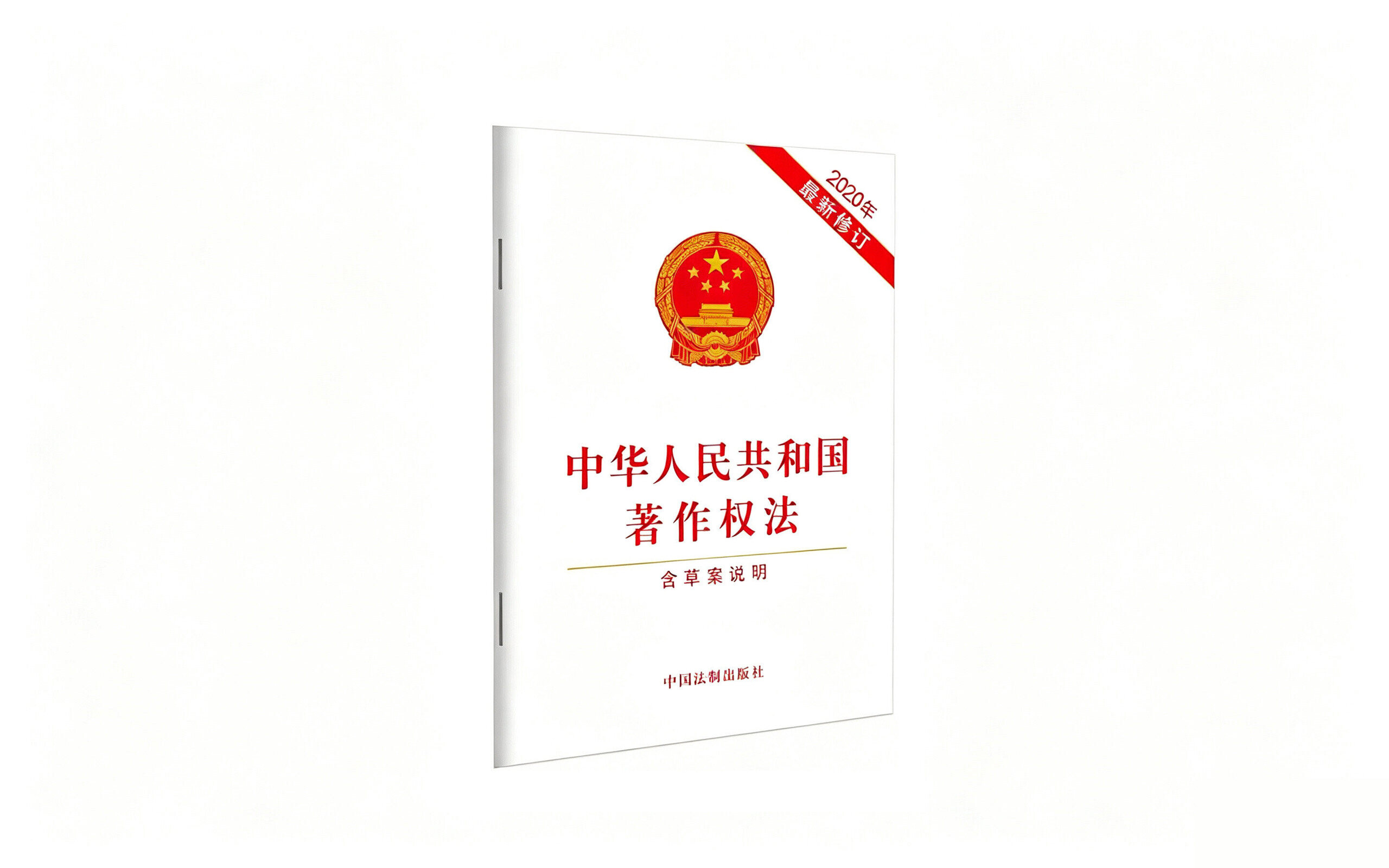
Copyright Law of the People's Republic of China
Copyright Law of the People's Republic of China
(Adopted at the 15th Meeting of the Standing Committee of the Seventh National People's Congress on 1990, 9, and 7; First amended pursuant to the Decision of the Standing Committee of the Ninth National People's Congress on 2001, 10, and 27 on Amending the Copyright Law of the People's Republic of China; Second amended pursuant to the Decision of the Standing Committee of the Eleventh National People's Congress on 2010, 2, and 26 on Amending the Copyright Law of the People's Republic of China; Third amended pursuant to the Decision of the Standing Committee of the Thirteenth National People's Congress on 2020, 11, and 11 on Amending the Copyright Law of the People's Republic of China)
Table of Contents
Chapter 1: General Provisions
Chapter 2: Copyright
Section 1: Copyright Owners and Their Rights
Section 2: Ownership of Copyright
Section 3: Duration of Rights Protection
Section 4: Limitations on Rights
Chapter III: Contracts for Licensing and Assignment of Copyright
Chapter IV: Rights Related to Copyright
Section 1: Publication of Books and Periodicals
Section 2: Performance
Section 3: Audio and Video Recording
Section 4: Broadcasting by Radio Stations and Television Stations
Chapter V: Protection of Copyright and Related Rights
Chapter 6 Supplementary Provisions
Chapter 1: General Provisions
Article 1: This Law is enacted to protect the copyright of authors of literary, artistic, and scientific works, as well as related rights; to encourage the creation and dissemination of works that contribute to socialist spiritual and material civilization; and to promote the development and prosperity of socialist culture and science, in accordance with the Constitution.
Article 2: Works created by Chinese citizens, legal persons, or unincorporated organizations are protected by copyright under this Law, regardless of whether they have been published.
Copyright in works of foreigners or stateless persons is protected under this Law if such rights are enjoyed pursuant to agreements concluded between the country of which the author is a national or habitual resident and China, or international treaties to which both countries are parties.
Works of foreigners or stateless persons first published in China shall enjoy copyright protection under this Law.
Works by authors from countries that have not signed an agreement with China or participated in an international treaty, as well as works by stateless persons, are protected under this law if they are first published in a member country of the international treaty to which China is a party, or simultaneously published in both a member and non-member country.
Article 3: The term "works" as used in this Law refers to intellectual achievements that are original and can be expressed in a certain form within the fields of literature, art, and science. These include:
(1) Literary works;
(II) Oral Works;
(3) Musical, dramatic, quyi, dance, and acrobatic works;
(4) Artistic and architectural works;
(5) Photographic works;
(vi) Audiovisual works;
(7) Graphic works and models such as engineering design drawings, product design drawings, maps, and schematic diagrams;
(VIII) Computer Software;
(9) Other intellectual achievements that conform to the characteristics of a work.
Article 4: Copyright owners and holders of rights related to copyright shall exercise their rights in accordance with the Constitution and laws, without infringing upon public interests. The State shall supervise and administer the publication and dissemination of works in accordance with the law.
Article 5: This Law shall not apply to:
(I) Laws, regulations, resolutions, decisions, and orders of state organs, as well as other documents with legislative, administrative, or judicial nature, and their official translations;
(II) Pure facts and news reports;
(3) Calendars, general-purpose numerical tables, general-purpose forms, and formulas.
Article 6. The measures for the protection of copyright in works of folklore shall be prescribed separately by the State Council.
Article 7: The national competent authority for copyright is responsible for copyright administration nationwide; local competent authorities at or above the county level are responsible for copyright administration within their respective administrative regions.
Article 8. Copyright owners and other right holders may authorize collective management organizations to exercise their rights. A legally established collective management organization is a non-profit legal entity; once authorized, it may assert rights on behalf of copyright owners and other right holders in its own name and may participate as a party in litigation, arbitration, or mediation involving copyrights or related rights.
Collective management organizations for copyright collect usage fees from users based on authorization. The fee collection standards shall be determined through negotiation between the collective management organization and representatives of the users. If negotiations fail, either party may request a ruling from the competent national copyright authority. If dissatisfied with the ruling, either party may file a lawsuit in the People's Court. Alternatively, parties may directly file a lawsuit in the People's Court.
Collective management organizations for copyright shall regularly publish to the public general information on fee collection and distribution, the extraction and use of administrative fees, and unallocated portions of collected fees. They shall also establish a rights information inquiry system accessible to both rights holders and users. The national competent authority for copyright shall supervise and manage collective management organizations in accordance with the law.
The establishment, rights and obligations, collection and distribution of usage fees, as well as supervision and management of collective management organizations for copyright shall be separately prescribed by the State Council.
Chapter 2: Copyright
Section 1: Copyright Owners and Their Rights
Article 9: Copyright owners include:
(1) Author;
(2) Other natural persons, legal persons, or unincorporated organizations that enjoy copyright under this Law.
Article 10: Copyright includes the following personal rights and property rights:
(1) Right of publication, i.e., the right to decide whether a work shall be made available to the public;
(2) Right of Authorship: the right to claim authorship and sign one's name on the work.
(3) Right of Modification: the right to modify or authorize others to modify the work;
(4) Right of Integrity: the right to protect the work against distortion or mutilation;
(5) Right of Reproduction: the right to produce one or more copies of a work by means of printing, photocopying, rubbing, recording, videotaping, dubbing, photographing, digitization, or other methods.
(6) Right of Distribution: the right to make available to the public the original or copies of the work by sale or gift.
(7) Right of rental, which refers to the right to authorize others to temporarily use the original or copies of audio-visual works and computer software for a fee, except where computer software is not the primary subject of the rental.
(8) Right of Exhibition: the right to publicly display the original or copies of works of fine art or photography;
(9) Right of performance, that is, the right to publicly perform a work and to communicate a performance of the work to the public by any means.
(10) Right of public performance: the right to publicly reproduce works of fine art, photography, audiovisual works, etc., through technical equipment such as projectors and slide projectors;
(11) Right of broadcasting: the right to publicly communicate or rebroadcast a work by wire or wireless means, and to communicate such broadcasted works to the public by loudspeakers or other analogous tools for transmitting signs, sounds, or images; this does not include the right specified in item (12) of this paragraph.
(XII) Right of information network dissemination: the right to provide works to the public by wired or wireless means, enabling the public to access the works at a time and place of their own choosing.
(13) Right of cinematography: the right to fix a work in a carrier by means of making an audiovisual work;
(14) Right of adaptation: the right to alter a work and create an original new work based on it.
(15) Right of Translation: The right to convert a work from one language into another.
(16) Right of compilation: the right to compile a work or excerpts thereof into a new work through selection or arrangement.
(17) Other rights that shall be enjoyed by the copyright owner.
The copyright owner may license others to exercise the rights specified in items 5 through 17 of the preceding paragraph and shall receive remuneration according to the agreement or relevant provisions of this Law.
The copyright owner may assign all or part of the rights specified in items 5 through 17 of the first paragraph of this Article and shall receive remuneration as agreed or in accordance with relevant provisions of this Law.
Section 2: Ownership of Copyright
Article 11: Copyright belongs to the author, unless otherwise provided by this Law.
A natural person who creates a work is the author.
A work created under the direction of a legal person or non-legal-person organization, reflecting its will, and for which it bears responsibility shall be deemed to have been authored by that legal person or non-legal-person organization.
Article 12: The natural person, legal person, or unincorporated organization named on a work shall be deemed its author and the holder of corresponding rights, unless otherwise proven.
Authors and other copyright holders may register their works with a designated registration authority approved by the national copyright administration.
Rights related to copyright shall apply the provisions of the preceding two paragraphs mutatis mutandis.
Article 13: Copyright in derivative works created through adaptation, translation, annotation, or arrangement of existing works shall be enjoyed by the adapter, translator, annotator, or arranger. However, when exercising such copyright, infringement of the copyright in the original work shall not occur.
Article 14: Copyright in a work created jointly by two or more persons shall be owned jointly by the co-authors. A person who has not participated in the creation of the work cannot be deemed a co-author.
Copyright in a joint work shall be exercised by the co-authors through mutual agreement. If no agreement is reached and there is no justified reason, no party may prevent another from exercising rights other than transferring the copyright, granting an exclusive license to a third party, or pledging the copyright; however, any income derived must be fairly distributed among all co-authors.
For a collaborative work that can be used separately, each author may independently exercise copyright in their own contribution, provided that such exercise does not infringe upon the copyright of the collaborative work as a whole.
Article 15: A compilation of several works, fragments of works, or data or other materials that do not constitute works shall be deemed a compiled work if the selection or arrangement of its content reflects originality. The copyright in such a compiled work shall be enjoyed by the compiler; however, in exercising such copyright, the rights in the original works must not be infringed.
Article 16. The use of a work derived from adaptation, translation, annotation, arrangement, or compilation of an existing work for publication, performance, or the production of audio-visual recordings shall require permission from both the copyright owner of the derivative work and the copyright owner of the original work, and payment of remuneration.
Article 17 The copyright in cinematographic works and audio-visual works constituting television dramas shall be enjoyed by the producer. However, authors such as screenwriters, directors, cinematographers, lyricists, and composers shall enjoy the right of authorship and the right to receive remuneration in accordance with the contracts concluded with the producer.
Copyright ownership of audiovisual works not covered by the preceding provisions shall be determined by agreement between the parties; in the absence of such an agreement or where it is unclear, ownership shall vest in the producer, provided that authors retain the right to claim authorship and to receive remuneration.
Authors of works that can be used separately, such as scripts and music in audiovisual works, may exercise their copyright independently.
Article 18: A work created by an individual in the course of fulfilling their duties for a legal person or unincorporated organization is a service work. Except as provided in paragraph 2 of this Article, the copyright shall be enjoyed by the author; however, the legal person or unincorporated organization shall have the priority right to use the work within its business scope. Within two years after completion of the work, the author may not license a third party to use the work in the same manner as the organization uses it without the organization's consent.
For the following types of works created in the course of employment, the author retains the right of authorship, while all other copyright rights belong to the legal entity or unincorporated organization. The legal entity or unincorporated organization may award the author a reward:
(1) Primarily works created by employees using the material and technical resources of a legal person or unincorporated organization, where the legal person or unincorporated organization bears responsibility, such as engineering design drawings, product design drawings, maps, schematic diagrams, and computer software.
(2) Works created by employees of newspapers, periodical publishers, news agencies, radio stations, and television stations as part of their official duties;
(3) Works of service created under circumstances where copyright is vested in the legal person or non-legal-person organization, as prescribed by laws, administrative regulations, or contract.
Article 19: For works created under commission, the ownership of copyright shall be determined by agreement between the client and the commissioned creator. If there is no clear agreement or no contract is concluded, the copyright shall belong to the commissioned creator.
Article 20: The transfer of ownership of the original work does not alter the ownership of the copyright, except that the right to exhibit the original of a fine art or photographic work is enjoyed by its owner.
When an author transfers ownership of the original unpublished work of fine art or photography to another party, the transferee's exhibition of that original does not infringe upon the author's right of publication.
Article 21: Where copyright belongs to a natural person, upon that person's death, the rights specified in items 5 through 17 of Paragraph 1 of Article 10 of this Law shall be transferred in accordance with the law during the protection period prescribed by this Law.
When copyright belongs to a legal person or an unincorporated organization, and that legal person or unincorporated organization undergoes a change or terminates, the rights specified in items 5 through 17 of paragraph 1 of Article 10 of this Law shall be enjoyed by the legal person or unincorporated organization that succeeds to its rights and obligations within the protection period prescribed by this Law. If there is no such successor, the rights shall be enjoyed by the State.
Section 3: Duration of Rights Protection
Article 22: The term of protection for an author's right of authorship, right of modification, and right to protect the integrity of the work shall not be limited.
Article 23: The right of publication and the rights specified in items 5 through 17 of paragraph 1 of Article 10 of this Law for works created by natural persons shall be protected for the author's lifetime plus 50 years, expiring on 12 31 of the 50th year following the author's death; for joint works, they shall expire on 12 31 of the 50th year following the death of the last surviving author.
For works created by a legal person or non-legal person organization, and for service works where the copyright (except the right of authorship) belongs to the legal person or non-legal person organization, the protection period for the right of publication shall be 50 years, expiring on 12/31 of the 50th year after the completion of the work. The protection period for the rights specified in Items 5 through 17 of Paragraph 1 of Article 10 of this Law shall also be 50 years, expiring on 12/31 of the 50th year after the first publication of the work; however, if the work is not published within 50 years from its completion, it shall no longer be protected under this Law.
For audiovisual works, the protection period for the right of publication shall be fifty years, expiring on 12 31 of the fiftieth year following the completion of the work; the protection period for the rights specified in items 5 through 17 of paragraph 1 of Article 10 of this Law shall be fifty years, expiring on 12 31 of the fiftieth year following the first publication of the work. However, if a work is not published within fifty years from its completion, it shall no longer be protected under this Law.
Section 4: Limitations on Rights
Article 24: Under the following circumstances, a work may be used without the copyright owner's permission and without payment of remuneration, provided that the author's name or title is indicated, the title of the work is cited, and such use does not impair the normal exploitation of the work nor unreasonably prejudice the legitimate rights and interests of the copyright owner:
(1) Use of a published work for personal study, research, or appreciation;
(2) To quote a previously published work from another author for the purpose of introducing, reviewing, or explaining that work or an issue;
(3) Reprinting or quoting, in newspapers, periodicals, radio stations, television stations, and other media for news reporting, works that have already been published where such use is unavoidable;
(4) Newspapers, periodicals, radio stations, television stations, and other media may publish or broadcast current affairs articles on political, economic, or religious issues that have already been published by other such media, unless the copyright owner has explicitly prohibited their use.
(5) Newspapers, periodicals, radio stations, television stations, and other media may publish or broadcast speeches made at public gatherings, unless the author has declared that such publication or broadcast is not permitted.
(6) For classroom teaching or scientific research, translating, adapting, compiling, broadcasting, or making a small number of copies of already published works for use by teachers or researchers; provided that such works shall not be published or distributed.
(7) Use of published works by state organs within a reasonable scope for the performance of their official duties;
(8) Libraries, archives, museums, art galleries, and cultural centers may reproduce works in their collections for the purpose of display or preservation.
(9) Free performance of a published work, where no fees are charged to the public, no remuneration is paid to the performers, and the performance is not for profit.
(10) To trace, paint, photograph, or record works of art that are installed or displayed in public places;
(11) Translate works already published in China by Chinese citizens, legal persons, or unincorporated organizations into minority languages for domestic publication and distribution.
(12) Provide published works in accessible formats perceivable by people with reading disabilities.
(13) Other circumstances prescribed by laws or administrative regulations.
The preceding provisions apply to limitations on rights related to copyright.
Article 25: For the purpose of implementing compulsory education and national education plans, textbooks may include excerpts from already published works or short literary, musical, single visual art, photographic, or graphic works without obtaining permission from the copyright owner. However, remuneration must be paid to the copyright owner in accordance with regulations, the author's name or title and the work's title must be indicated, and other rights enjoyed by the copyright owner under this Law shall not be infringed upon.
The preceding provisions apply to limitations on rights related to copyright.
Chapter III: Contracts for Licensing and Assignment of Copyright
Article 26: Using another person's work shall require concluding a licensing agreement with the copyright owner, unless otherwise provided by this Law.
The license agreement shall include the following main terms:
(1) Types of rights granted for use;
(II) The licensed rights are either exclusive or non-exclusive.
(3) Territorial scope and duration of the license;
(IV) Compensation Standards and Methods;
(V) Liability for Breach of Contract;
(vi) Other matters that both parties agree to stipulate.
Article 27: The transfer of the rights specified in items 5 through 17 of paragraph 1 of Article 10 of this Law shall be effected by a written contract.
A rights transfer agreement shall include the following main terms:
(1) Title of the work;
(II) Types and territorial scope of rights transferred;
(3) Transfer Price;
(4) Date and method of payment for the transfer price;
(V) Liability for Breach of Contract;
(vi) Other matters that both parties agree to stipulate.
Article 28: Where property rights under a copyright are pledged, the pledgor and pledgee shall complete the pledge registration in accordance with the law.
Article 29: Any rights not expressly licensed or transferred in a licensing contract or assignment contract shall not be exercised by the other party without the copyright owner's consent.
Article 30: Remuneration for the use of works may be agreed upon by the parties or paid according to the rates established by the competent copyright authority in conjunction with relevant departments. If the parties' agreement is unclear, remuneration shall be paid in accordance with the rates set by the competent copyright authority and relevant departments.
Article 31: When publishers, performers, producers of sound or video recordings, radio stations, and television stations use others' works in accordance with the relevant provisions of this Law, they shall not infringe upon the authors' right of authorship, right of modification, right to protect the integrity of their works, or right to receive remuneration.
Chapter IV: Rights Related to Copyright
Section 1: Publication of Books and Periodicals
Article 32. A publisher shall conclude a publishing contract with the copyright owner and pay remuneration when publishing books.
Article 33: The exclusive right of publication enjoyed by a book publisher with respect to a work delivered by the copyright owner, as stipulated in the contract, shall be protected by law. No other party may publish that work.
Article 34 The copyright owner shall deliver the work within the time limit agreed upon in the contract. The publisher of a book shall publish the book in accordance with the quality standards and time limits specified in the contract.
If a publisher fails to publish the book within the time limit agreed upon in the contract, it shall bear civil liability in accordance with Article 61 of this Law.
If a book publisher reprints or republishes a work, they must notify the copyright owner and pay remuneration. If a book goes out of print and the publisher refuses to reprint or republish it, the copyright owner has the right to terminate the contract.
Article 35: Where a copyright owner submits a manuscript to a newspaper or periodical, they may submit the same work to other newspapers or periodicals if no notice is received within 15 days from the date of dispatch indicating the newspaper's decision to publish, or within 30 days from the date of dispatch indicating the periodical's decision to publish. This does not apply if otherwise agreed by both parties.
After publication, other newspapers and periodicals may reprint or excerpt the work for inclusion as an abstract or reference material, unless the copyright holder has declared that such use is prohibited. However, they must pay remuneration to the copyright holder in accordance with applicable regulations.
Article 36. With the author's permission, a book publisher may revise or abridge the work.
Newspapers and periodicals may make textual edits or omissions to a work. Any changes to the content require the author's permission.
Article 37: Publishers have the right to authorize or prohibit others from using the layout design of their published books and periodicals.
The protection period for the rights specified in the preceding paragraph shall be ten years, expiring on 12/31 of the tenth year following the first publication of the book or journal using that layout design.
Section 2: Performance
Article 38: Where a performer uses another person's work in a performance, the performer shall obtain permission from the copyright owner and pay remuneration. If an organizer organizes the performance, the organizer shall obtain permission from the copyright owner and pay remuneration.
Article 39 Performers shall enjoy the following rights in respect of their performances:
(1) Right of paternity: to claim authorship of the performance.
(2) Protect the performer's image from distortion;
(3) the right to authorize live broadcasting and public transmission of their live performance, and to receive remuneration therefor;
(4) License others to record audio or video and receive remuneration;
(5) License others to reproduce, distribute, or rent phonograms and videograms containing their performances and receive remuneration;
(6) License others to disseminate their performances to the public via information networks and receive remuneration.
If the licensee uses the work in any of the manners specified in Items 3 through 6 of the preceding paragraph, they shall also obtain permission from the copyright owner and pay remuneration.
Article 40 A performance by an actor in fulfillment of the performing tasks assigned by their employing unit shall be deemed a service performance. The actor retains the right to claim authorship and to protect the integrity of their performance image. All other rights shall be determined by agreement between the parties. In the absence of such an agreement or where it is unclear, all rights to the service performance shall vest with the employing unit.
The right to a performance in the course of duty is enjoyed by the performer. The performing organization may use the performance free of charge within its business scope.
Article 41: The protection period for the rights specified in Item (1) and Item (2) of Paragraph 1, Article 39 of this Law shall not be subject to any time limit.
The protection period for the rights specified in items 3 to 6 of paragraph 1 of Article 39 of this Law shall be fifty years, expiring on 12 31 of the fiftieth year following the performance.
Section 3: Audio and Video Recording
Article 42: A producer of sound or video recordings shall obtain permission from the copyright owner and pay remuneration when using another person's work to produce sound or video recordings.
A producer of sound recordings may use a musical work that has already been legally recorded as a sound recording without the copyright owner's permission, provided that remuneration is paid in accordance with regulations. However, this does not apply if the copyright owner has declared that the work may not be used.
Article 43: Producers of sound recordings or video recordings shall enter into contracts with performers and pay them remuneration.
Article 44 Producers of sound recordings or video recordings shall have the right to authorize others to reproduce, distribute, rent out, or communicate their works to the public via information networks and to receive remuneration therefor. The term of protection for such rights shall be fifty years, expiring on December 31 of the fiftieth year following the year in which the recording or video recording was first produced.
Licensees shall obtain permission from both the copyright owner and performers and pay remuneration when reproducing, distributing, or making sound recordings or video recordings available to the public via information networks. When renting such recordings, licensees must also obtain permission from performers and pay remuneration.
Article 45: Where a sound recording is publicly transmitted via wire or wireless means, or broadcast to the public through technical equipment for transmitting sounds, remuneration shall be paid to the producer of the sound recording.
Section 4: Broadcasting by Radio Stations and Television Stations
Article 46: A radio station or television station shall obtain permission from the copyright owner and pay remuneration before broadcasting an unpublished work of another person.
Radio and television stations may broadcast published works without the copyright owner's permission, provided they pay remuneration in accordance with regulations.
Article 47: Radio stations and television stations have the right to prohibit the following acts without their permission:
(1) Rebroadcast its radio or television broadcasts by wire or wireless means;
(2) Record and reproduce the radio or television broadcasts it airs;
(3) Transmitting the broadcast or television programs it airs to the public via information networks.
Broadcast stations and television stations exercising the rights specified in the preceding paragraph shall not affect, restrict, or infringe upon others' exercise of copyright or related rights.
The protection period for the rights specified in the first paragraph of this Article shall be 50 years, expiring on 12 31 of the fiftieth year following the initial broadcast or transmission.
Article 48: When a television station broadcasts another person's audiovisual works or sound recordings, it shall obtain permission from the copyright owner of the audiovisual work or the producer of the sound recording and pay remuneration. When broadcasting another person's sound recordings, it shall also obtain permission from the copyright owner and pay remuneration.
Chapter V: Protection of Copyright and Related Rights
Article 49. To protect copyright and related rights, right holders may adopt technological measures.
Without the rights holder's permission, no organization or individual may intentionally circumvent or disable technical protection measures, nor manufacture, import, or distribute devices or components for that purpose, nor provide technical services to others for such circumvention. Exceptions apply where permitted by laws or administrative regulations.
The term "technical measures" as used in this Law refers to effective technologies, devices, or components used to prevent or restrict unauthorized access to, viewing of, or enjoyment of works, performances, or sound and video recordings, or the making available of such works, performances, or sound and video recordings to the public via information networks.
Article 50: The following circumstances may bypass technical measures, but shall not provide others with technology, devices, or components for bypassing such measures, nor infringe upon other rights enjoyed by the right holder in accordance with the law:
(1) Providing a small number of published works for use by teachers or researchers in school classroom teaching or scientific research, where such works cannot be obtained through normal channels;
(2) Providing published works that are unavailable through normal channels to individuals with reading disabilities in accessible formats they can perceive, without the intent of making a profit.
(3) State organs perform official duties in accordance with administrative, supervisory, and judicial procedures;
(4) Test the security of computers, systems, or networks.
(5) Conduct encryption research or reverse engineering of computer software.
The preceding provisions apply to limitations on rights related to copyright.
Article 51: The following acts shall not be performed without the permission of the rights holder:
(1) Intentionally deleting or altering rights management information on works, typographical designs, performances, sound recordings, video recordings, radio broadcasts, or television broadcasts, except where such deletion or alteration is unavoidable due to technical reasons;
(II) Knowingly or should have known that rights management information on works, layout designs of published editions, performances, sound recordings or video recordings, or broadcasts or television programs was deleted or altered without permission, yet still made available to the public.
Article 52: Any of the following infringing acts shall, depending on the circumstances, result in civil liability such as ceasing the infringement, eliminating adverse effects, making an apology, and compensating for losses.
(1) Publishing a work without the copyright owner's permission;
(2) Publishing a work created in collaboration with others as your own without the consent of your co-authors.
(3) Affixing one's name to another's work for personal gain without having participated in the creation.
(4) Distorting or tampering with another person's work;
(5) Plagiarizing others' works;
(6) Without the copyright owner's permission, using a work by exhibiting it or producing audiovisual works, or by adapting, translating, annotating, etc., unless otherwise provided in this Law;
(7) Failure to pay remuneration for using another person's work.
(8) Renting the original or a copy of an audio-visual work, computer software, or sound recording or video recording without the permission of the copyright owner, performer, or producer of the sound recording or video recording, except as otherwise provided in this Law;
(9) Using the layout design of books or periodicals published by a publisher without permission.
(10) Broadcasting live or transmitting to the public a live performance, or recording the performance, without the performer's consent.
(11) Other acts of infringing copyright or related rights.
Article 53. Any person who commits any of the following acts of infringement shall, depending on the circumstances, bear civil liability as prescribed in Article 52 of this Law; where such acts also harm public interests, the competent copyright administration department shall order cessation of the infringing acts, issue a warning, confiscate illegal income, and confiscate and destroy in an environmentally harmless manner the infringing copies as well as the materials, tools, equipment, etc., primarily used to produce them. If the illegal business volume exceeds RMB 50,000, a fine of not less than one time but not more than five times the illegal business volume may be imposed; if there is no illegal business volume, the illegal business volume cannot be calculated, or it is less than RMB 50,000, a fine of up to RMB 250,000 may be imposed. Where the act constitutes a crime, criminal responsibility shall be investigated in accordance with the law.
(1) Reproducing, distributing, performing, projecting, broadcasting, compiling, or making available to the public through information networks any work without the permission of the copyright holder, unless otherwise provided by this Law;
(II) Publishing books for which others hold exclusive publishing rights;
(3) Reproducing or distributing sound recordings or video recordings that contain a performer's performance, or making such performances available to the public via information networks, without the performer's permission, unless otherwise provided by this Law;
(4) Reproducing, distributing, or communicating to the public via information networks any sound recordings or video recordings made by a producer without their authorization, unless otherwise provided by this Law;
(5) Without authorization, broadcasting, reproducing, or communicating to the public via information networks any radio or television programs, except as otherwise provided in this Law;
(6) Except as otherwise provided by laws or administrative regulations, it is prohibited to intentionally circumvent or disable technical measures without the permission of the copyright owner or other right holders related to copyright; to intentionally manufacture, import, or provide devices or components primarily designed for circumventing or disabling such technical measures; or to intentionally provide technical services that facilitate others in circumventing or disabling these measures.
(7) Without permission from the copyright owner or other rights holders, intentionally removing or altering rights management information on works, layouts of published editions, performances, sound recordings, video recordings, or radio and television broadcasts; or knowingly providing such content to the public after being aware or should have been aware that the rights management information was removed or altered without permission. This does not apply where laws or administrative regulations provide otherwise.
(8) Producing or selling works bearing another person's name as a forgery.
Article 54: Infringement of copyright or related rights shall be compensated based on the actual losses suffered by the right holder or the illegal gains obtained by the infringer. Where such actual losses or illegal gains are difficult to calculate, compensation may be determined by reference to the licensing fees for the use of the right. For willful infringement of copyright or related rights where the circumstances are serious, compensation may be set at not less than one time and not more than five times the amount determined by the aforementioned methods.
Where the right holder's actual losses, the infringer's illegal gains, or the licensing fees are difficult to calculate, the People's Court shall, based on the circumstances of the infringement, order compensation ranging from 500 yuan to 5 million yuan.
The amount of compensation shall also include reasonable expenses incurred by the right holder in stopping the infringement.
To determine the amount of compensation, if the right holder has fulfilled their necessary burden of proof and relevant books, records, or other materials are primarily under the control of the infringer, the People's Court may order the infringer to produce such books, records, or materials. If the infringer fails to provide them or provides false ones, the People's Court may determine the compensation amount based on the right holder's claims and evidence.
In copyright infringement cases, upon the rights holder's request, the people's court shall order the destruction of infringing copies, except in special circumstances. For materials, tools, equipment, etc., primarily used to produce infringing copies, the court shall order their destruction without compensation; or, in special circumstances, order that such materials, tools, equipment, etc., be prohibited from entering commercial channels, also without compensation.
Article 55 When the department in charge of copyright investigates suspected acts of infringing upon copyright or related rights, it may: question relevant parties and investigate circumstances related to the suspected illegal acts; conduct on-site inspections of premises and items associated with the suspected illegal acts; review and copy contracts, invoices, account books, and other relevant materials related to the suspected illegal acts; and seal up or seize premises and items associated with the suspected illegal acts.
When the competent department for copyright exercises its authority as prescribed in the preceding paragraph, parties concerned shall cooperate and assist and may not refuse or obstruct such exercise.
Article 56: Where a copyright owner or a person with rights related to copyright has evidence that another person is currently committing or about to commit an act infringing upon or obstructing their rights, and failure to stop such act immediately would cause irreparable harm to their lawful rights and interests, they may, prior to filing a lawsuit, apply to the People's Court in accordance with the law for measures such as property preservation, orders to perform specific acts, or injunctions prohibiting certain acts.
Article 57: To stop an infringing act, where evidence may be lost or difficult to obtain in the future, a copyright owner or a rights holder related to copyright may apply to the people's court for preservation of evidence prior to filing a lawsuit in accordance with the law.
Article 58: In adjudicating cases, the People's Court may confiscate illegal income, infringing copies, and property used for unlawful activities involving copyright or related rights.
Article 59: Publishers and producers of reproductions shall bear legal liability if they fail to prove that their publication or production was authorized legally. Distributors of such reproductions, as well as lessors of reproductions of audio-visual works, computer software, or sound recordings and video recordings, shall bear legal liability if they fail to prove that the distributed or leased reproductions have a lawful source.
In litigation proceedings, an alleged infringer asserting that they are not liable for infringement must provide evidence demonstrating either that they have obtained the rights holder's permission or that their use falls under circumstances permitted by this Law without such permission.
Article 60: Copyright disputes may be mediated, or arbitration may be sought from an arbitration institution based on a written arbitration agreement reached by the parties or an arbitration clause contained in the copyright contract.
If there is no written arbitration agreement and no arbitration clause in the copyright contract, a lawsuit may be filed directly with the People's Court.
Article 61. Civil liability for failure to perform or non-compliant performance of contractual obligations, as well as the exercise of litigation rights and applications for preservation, shall be governed by relevant laws.
Chapter 6: Supplementary Provisions
Article 62: The term "copyright" as used in this Law refers to copyright.
Article 63: The term "publishing" as referred to in Article 2 of this Law means the reproduction and distribution of works.
Article 64: The measures for the protection of computer software and the right to disseminate information over information networks shall be prescribed separately by the State Council.
Article 65. For photographic works, if the protection period for the right of publication and the rights specified in items 5 through 17 of paragraph 1 of Article 10 of this Law expired before 2021 year 6 month 1 day, but is still within the protection period under the provisions of paragraph 1 of Article 23 of this Law, such works shall no longer be protected.
Article 66: The rights of copyright owners, publishers, performers, producers of sound and video recordings, radio stations, and television stations as stipulated in this Law shall be protected under this Law if such rights have not expired by the effective date of this Law.
Infringement or breach of contract occurring before the effective date of this Law shall be handled in accordance with the relevant regulations at the time such infringement or breach occurred.
Article 67 This Law shall come into force on 1991 6, 1.
Need to publish a book? Consult a professional publishing consultant now.
Free Manuscript EvaluationRelated News
Prohibited Content in Formal Book Publishing and Regulations on Forbidden Material
2026/09/11
Why self-publish when you've already written a manuscript?
2026/08/17
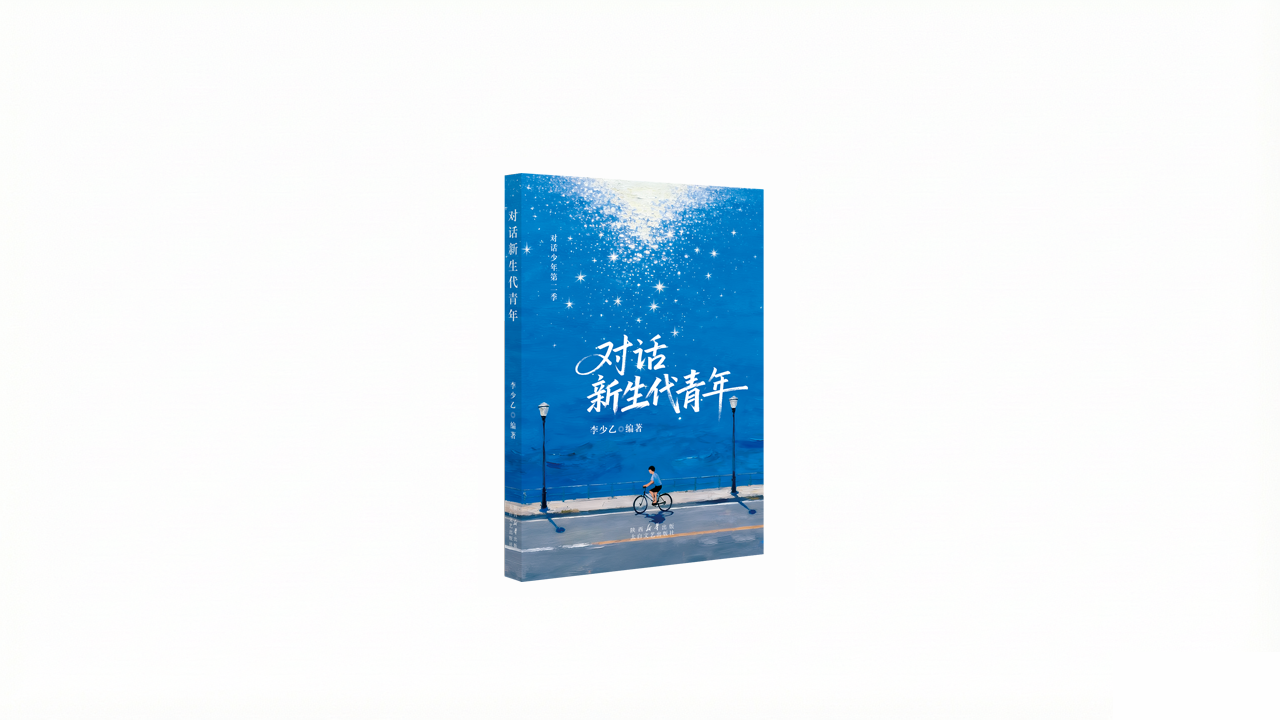
Listen to the Voices of the New Generation: "Dialogue with Young People" Now Available – Bridging Generational Gaps
2026/07/23
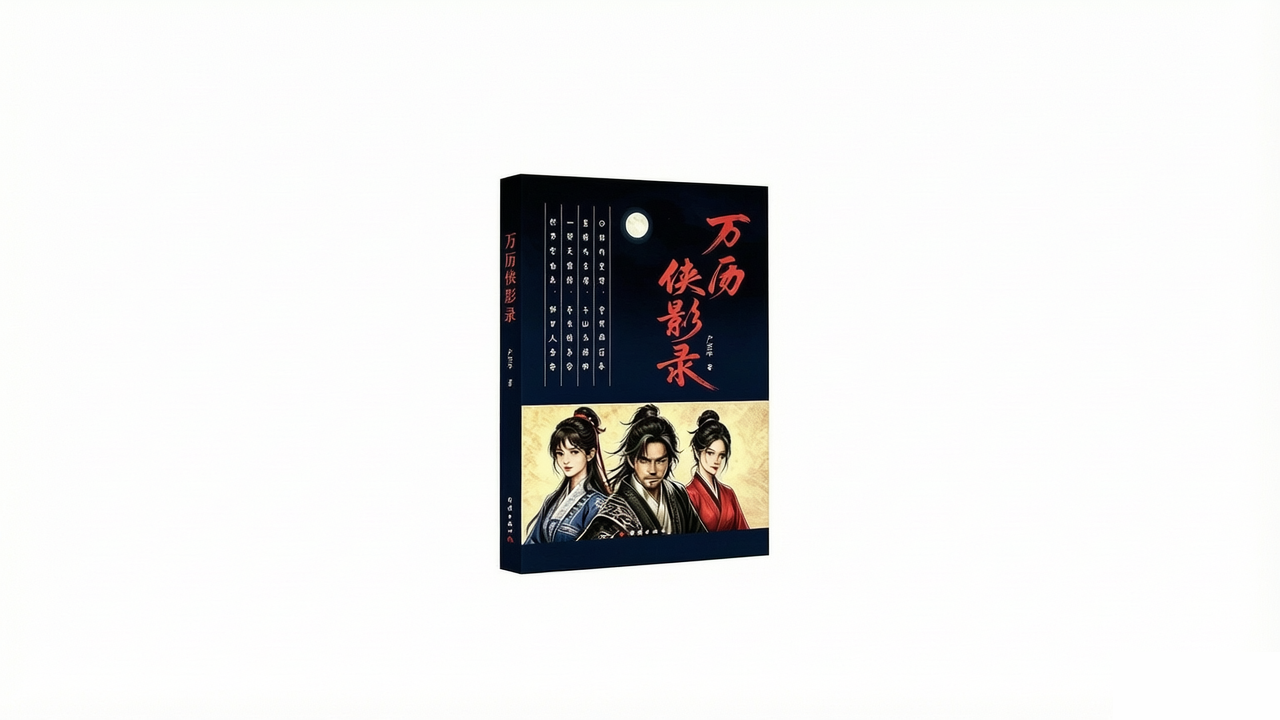
New Epic of the Wanli Era: "The Legend of the Righteous" Published, Chronicling Late Ming Turmoil with Patriotism and Chivalry
2026/07/23